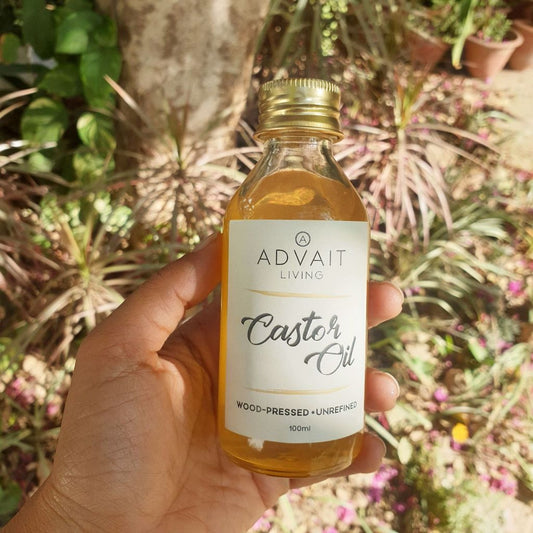

Edible castor oil is known for its medicinal properties and has been used in Ayurveda and ancient medicine for thousands of years. Over time, the benefits of castor oil have extended beyond traditional remedies, finding relevance in modern health, skin, and hair care routines. But what is still less known is the wide range of advantages of castor oil when used both internally and externally. Not only is it used to cure constipation, but also for improving eye health, detoxification, arthritis, and even improving skin and scalp health. Here is all that you need to know about this amazing castor oil, including its role in hair and skin care.
What is Edible Castor Oil?
Edible castor oil is a vegetable oil that is derived from the seeds of the castor bean plant, known as Ricinus communis. This plant is a member of the Euphorbiaceae family, native to Eastern Africa, the Mediterranean Basin and Asian countries. Known by various names, castor oil is called Vilakennai in Tamil, Arandi Tel in Hindi and Amudamu in Telugu.
It is a translucent liquid having a pale-yellow colour with a unique taste and odour. One of the main components of castor oil, ricinoleic acid, which is a monounsaturated fatty acid, constitutes about 90% of the total oil composition. This unique composition distinguishes it from other vegetable oils and supports the widely recognized benefits of castor oil for hair and skin.
Ricinoleic acid is an omega-9 fatty acid that is known to possess anti-bacterial and anti-inflammatory properties. A review published in the Journal of Oleo Science shows that this fatty acid reduces swelling and pain caused by inflammation (1). It also has bioactive compounds such as vitamin E components (tocopherols or tocotrienols), phospholipids, phenolics, among others, making it suitable for many health applications.
How is Edible Castor Oil Made?
Edible castor oil is extracted from castor beans by employing either of the two extraction methods:
More than 90% of castor oil available in the market is obtained by using the solvent extraction technique. Refined castor oil is produced by using solvents such as hexane or ethanol to induce higher yields of oil production. This process also requires application of high temperatures and multiple chemical washing and cleaning steps to obtain castor oils suitable for human consumption, although this can impact some of the natural benefits of castor oil.
Cold pressing of castor beans produces high-quality castor oil. In this method, the oil is extracted by mechanical pressing of castor seeds below 50 degrees Celsius without using any heat or solvents. This helps preserve the natural properties responsible for many benefits of castor oil.
In this method, the seeds are crushed and adjusted to a low moisture content. Then the crushed seeds are loaded into a hydraulic press and pressed mechanically to extract the oil.
The highest quality of edible castor oil is produced using the traditional wooden chekku that maintains temperatures below 45-50 degrees celsius and removes the oil only once from the seed (without pressing them again and again). The oil thus produced is a pale yellow, thick, translucent oil extracted without adding any heat solvents. It is pure, toxin-free, chemical-free and hexane-free making it suitable for safe oral and topical applications.
Read more about cold pressing vs the refined oil extraction process here.
Medicinal Uses of Edible Castor Oil
The medicinal uses of castor oil date back centuries. History documents the use of castor oil as a medicine in Egypt, India, China, Iran, Africa, Greece and Rome.
Here are 8 powerful and evidence-based medicinal uses of edible castor oil:
1. Powerful Laxative
Castor oil is approved by the FDA (Food and Drug Administration) as a powerful laxative as it helps in clearing the bowels by increasing the bowel muscle movement, helping waste push through the intestines.
Research by Tunaru et al. (2012) shows that when castor oil is consumed, it is broken down in the small intestine into an active compound called ricinoleic acid. This compound stimulates the intestinal muscles, helping move waste through the digestive tract. This process explains castor oil’s laxative effect and is why it is commonly associated with digestive support.
Castor oil is thus used to cure constipation and is even used by doctors to clear the bowels of patients before conducting medical procedures. However, studies show that castor oil should be consumed in small quantities as consuming large quantities may lead to abdominal cramping, nausea, vomiting or even diarrhoea, despite the known benefits of castor oil.
2. Induces Labour in Pregnant Women
During ancient times, castor oil was recommended to pregnant women to speed up the contraction of the uterus. This practice has been a topic of debate among medical professionals for a long time.
This may be because the same receptors found in the intestine are also present in the uterus. When castor oil breaks down into ricinoleic acid, it can activate these receptors, which may trigger uterine contractions. Some clinical studies, including a retrospective study by DeMaria et al. (2018), suggest that castor oil may help induce labour when used under medical supervision, although results vary and side effects have been reported. In these studies, fewer than 7% of participants experienced adverse effects such as nausea, vomiting, or severe diarrhoea. Therefore, it is essential to consult a doctor before considering this method.
3. Supports Immunity
Research suggests that castor oil may influence immune activity by affecting lymphocytes, a type of white blood cell that helps the body defend against infections. Lymphocytes include T cells, B cells, and natural killer cells, which play an important role in fighting bacteria, viruses, fungi, and toxins.
A study published in the Journal of Naturopathic Medicine found that short-term use of castor oil packs (around 2 to 7 hours) increased certain immune cells, including T and B cells, leading to a temporary rise in lymphocyte levels. This points to some lesser-known advantages of castor oil in supporting immune function. The same journal also reported that longer-term use of castor oil packs (2 to 5 weeks) helped normalise lymphocyte levels, which may indicate a reduction in inflammation over time.
4. Cell Hydration and Treats Skin Infections
Castor oil is rich in ricinoleic acid, a type of unsaturated fatty acid that contributes to the well-known benefits of castor oil for skin. These fatty acids act as a skin barrier, avoiding any kind of moisture loss from the epidermis, i.e. the outer layer of the skin. This moisture-locking property of castor oil helps in keeping the skin cells hydrated.
Castor oil can also be used to synthesise estolides that are essential for water retention in the upper layers of the skin, thereby increasing moisturization of the skin and lips.
Evidence also suggests that castor oil has anti-bacterial and anti-microbial properties and prevents the growth of bacteria, viruses, moulds and yeasts (2). Thus, castor oil, when used topically on the skin, may be effective in reducing the development of acne, and even treating skin infections such as candida and yeast formations.
Learn more about how castor oil is commonly used in skincare routines here.
5. Promotes Scalp Health

Castor oil has been useful for centuries in boosting hair growth and improving scalp health. It is rich in Omega-9, one of the main mono-unsaturated fatty acids (MUFA) found in plant and animal sources; Omega-6 and Omega-7. Oils that are rich in fatty acids are well known to have benefits for the hair: linoleic acid (omega-6) minimises water loss from the hair with softening and nutritional qualities, and oleic acid (omega-9) has nourishing properties, making the hair softer, supple and more radiant, highlighting a key advantage of castor oil for hair.
The ricinoleic acid (omega-9) promotes blood circulation when castor oil is massaged into the scalp. This not only treats dry, flaky, itchy scalp by hydrating it, but also supports castor oil to grow hair by creating a healthier scalp environment. Even the anti-bacterial and anti-fungal properties of castor oil, due to the presence of omega 6, help in treating dandruff and scalp infections.
Read our detailed guide on different ways to use castor oil for scalp and hair care.
6. Reduces Pain
Castor oil is often used in external treatments because it feels gentle and soothing on the skin. Some discomfort during such treatments can happen due to friction or pressure on the skin. Since castor oil is naturally thick and smooth, it helps reduce this discomfort and makes the experience more comfortable.
7. May Ease Arthritis Pain
Studies by Vieira et al. (2000) suggest that castor oil has anti-inflammatory properties, largely due to the action of ricinoleic acid. When applied topically, ricinoleic acid has been observed to reduce inflammation and discomfort, which may help ease swelling and arthritis-related symptoms. However, further studies are needed to confirm these effects in humans.
In another clinical study, Medhi et al. (2009) reported that oral supplementation with castor oil helped relieve symptoms of knee osteoarthritis over a four-week period, with no adverse effects noted. These findings suggest that castor oil may offer supportive benefits for joint comfort under appropriate medical guidance.
8. Supports Eye Health
Castor oil has anti-bacterial, anti-microbial and anti-inflammatory properties. Non-toxic and pure or sterile castor oil is used as a vehicle for delivering drugs as well. In Ayurveda, castor oil has been used to promote eye health for centuries. Castor oil is used to treat dry eyes, minimise eye infections, decrease irritation and redness of eyes and even increase lubrication in the eye.
In Western medicine, castor oil is used as one of the main ingredients in several over-the-counter eye drops that are used to improve dry eyes. Researchers have found that eye drops with castor oil reduced tear evaporation, thereby reducing dry eyes and increasing comfort. Treating dry eyes also helps prevent eye infections.
Studies also reveal that topical application of sterile castor oil near the ocular surface and eyelids can increase tear film lipid layer thickness and even help manage symptoms of the eye condition called blepharitis (3).
Due to the presence of ricinoleic acid, antioxidants and anti-inflammatory properties, castor oil improves hydration around the eye and helps reduce dark circles and wrinkles under the eyes.
Conclusion
Thus, there is no doubt that castor oil is quite valuable with significant uses. However, to ensure safe and non-adverse results, it is best to use chemical-free, pure, non-toxic and hexane-free products to treat your ailment. This is especially important when considering the advantage of castor oil for hair, skin, or overall wellness, as oil quality directly impacts results and safety.
Edible grade castor oils are usually safe for the above applications. However, check with the manufacturers and read the labels clearly before using your oil. Also, consult your doctor before you use the oil for any medical application or natural remedies at home.

Frequently Asked Questions
1. What is castor oil best used for?
Castor oil is best used for digestive support, skin hydration, and scalp care. The main benefits of cold pressed castor oil include its use as a natural laxative, support for joint comfort, and topical application for skin and hair. The key advantage of castor oil lies in its high ricinoleic acid content, which gives it anti-inflammatory and moisturizing properties. It is used both internally and topically, depending on the grade and purpose.
2. How to apply castor oil on the face?
To apply castor oil on the face, use a very small amount and gently massage it onto clean, damp skin, preferably diluted with a lighter oil. This method helps maximise the benefits of castor oil for the face, such as improved moisture retention and barrier support. When used correctly, it also supports overall skin hydration without clogging pores.
3. How to use castor oil for hair correctly?
To use castor oil, apply a small amount to the scalp and massage gently to support circulation. Leave it on for 30 minutes to a few hours before washing it off with a mild shampoo. While castor oil does not help new hair follicles to grow, its benefits for hair come from improved scalp hydration and reduced breakage, which support a healthier scalp environment.
4. Is it safe to drink castor oil?
The benefits of drinking castor oil are largely related to short-term relief from constipation, due to its stimulant laxative action. It is typically used occasionally and in small quantities rather than as a daily health practice. Because excessive intake may cause side effects such as cramping or diarrhoea, medical guidance is recommended before consuming it.
5. Can castor oil really regrow hair?
There is no strong clinical evidence that castor oil can regrow new hair follicles. However, it may improve scalp hydration, reduce dryness, and limit hair breakage. These effects can make hair appear healthier, but castor oil should not be considered a medical hair regrowth treatment.
Table of Contents
Most Recent Posts
-
1

Protect Your Skin This Holi With These Simple Tips
Advait LivingProtect Your Skin This Holi With These Simple Tips
Advait Living -
2

Castor Oil for Hair: 9 Powerful Remedies That Actually Work
Meenakshi TempCastor Oil for Hair: 9 Powerful Remedies That Actually Work
Meenakshi Temp -
3

7 Ways to Use Almond Oil for Your Skincare Routine
Advait Living7 Ways to Use Almond Oil for Your Skincare Routine
Advait Living -
4

8 Powerful Castor Oil Benefits & Remedies for Skincare
Meenakshi Temp8 Powerful Castor Oil Benefits & Remedies for Skincare
Meenakshi Temp - 5