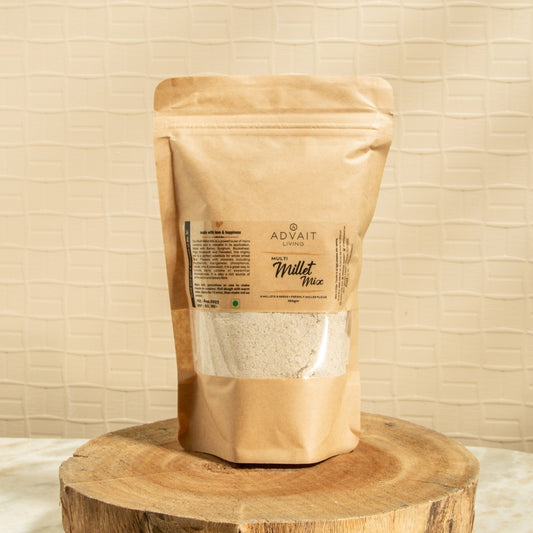

Multigrain atta has become a popular choice in Indian kitchens for people looking for a healthier flour for chapati and everyday cooking. Unlike refined flour, multigrain atta combines several whole grains to improve nutritional value, fibre content, and satiety.
As interest in healthy flour in India grows, many households are moving beyond regular wheat flour and exploring whole grain options such as multigrain atta, millet flour, and stone-ground flour.
But what exactly is multigrain atta? What grains are used in it? And is multigrain atta actually better than whole wheat flour?
This guide explains the nutrition facts of multigrain atta, the grains used in multigrain flour, health benefits, and practical ways to cook with it daily.
What Is Multigrain Atta?
Multigrain atta is flour made by grinding two or more whole grains together. These grains are usually milled with their bran, germ, and endosperm intact, which preserves fibre, minerals, and natural oils.
Common grains used in multigrain flour include:
- Whole wheat
- Ragi (finger millet)
- Jowar (sorghum)
- Bajra (pearl millet)
- Barley
- Oats
- Chickpea or other legumes
- Maize
- Flaxseeds or other seeds
Because different grains bring different nutrients, multigrain flour often provides more diverse nutrition than single grain flour.
However, not every product labelled multigrain is truly nutritious. Some commercial brands contain mostly wheat flour with only small amounts of other grains. If you are buying packaged flour, check the ingredient list carefully. Whole grains should appear at the top of the list.
Many people also prefer stone-milled multigrain atta without preservatives because the traditional grinding process retains more nutrients.
Multigrain Atta Nutrition Facts Per 100g
The exact nutritional profile of multigrain atta varies depending on the grains used. Based on typical cereal, millet, and legume compositions, a typical multigrain atta nutrition profile per 100g looks like this (1).
|
Nutrient |
Approximate Value |
|
Calories |
330 to 350 kcal |
|
Carbohydrates |
65 to 72 g |
|
Protein |
9 to 13 g |
|
Dietary Fibre |
7 to 9 g |
|
Fat |
2.5 to 4 g |
|
Iron |
3 to 4 mg |
*Values may vary depending on the grain composition and proportions used.
Compared with regular wheat flour, multigrain atta fibre content is usually higher, especially when the blend includes millets, legumes, and seeds.
Similarly, the protein in multigrain atta per 100g increases when chickpea, lentils, or flaxseed are included.
Multigrain Atta vs Whole Wheat Atta
One of the most common questions people ask is the difference between multigrain atta and whole wheat atta.
Whole wheat atta is made from a single grain, wheat, milled with its bran and germ. Multigrain atta blends several grains together to create a broader nutritional profile.
Multigrain Atta vs Whole Wheat Atta Nutrition (Per 100g)
|
Nutrient |
Multigrain Atta |
Whole Wheat Atta |
|
Calories |
~330 to 350 kcal |
~330 kcal |
|
Protein |
10 to 12 g (if legumes present) |
11 to 13 g |
|
Dietary Fibre |
7 to 9 g |
6 to 7 g |
|
Iron |
3 to 4 mg |
~3 to 3.5 mg |
Because of the added grains and seeds, multigrain atta typically contains more fibre and slightly higher protein.
Another important factor is glycemic response. Research suggests that multigrain flour blends containing legumes and millets may produce a lower glycaemic response than wheat flour alone (2).
Multigrain Atta vs Maida
The difference between multigrain atta and maida is significant.
Maida is refined wheat flour. During processing, the bran and germ are removed, which strips away fibre and micronutrients.
Multigrain atta, especially stone-ground multigrain atta, retains the entire grain.
As a result:
- Fibre content is higher
- Digestion is slower
- Nutrients such as iron and magnesium remain intact
- Satiety improves
For people looking for the best healthy flour for chapati, whole grain flours like multigrain atta are generally a better option than refined flour.
Grains in Multigrain Atta and Their Benefits
The nutritional value of multigrain flour depends largely on the grains included in the blend.
|
Whole Wheat |
The base grain in most blends. Provides complex carbohydrates, B vitamins, insoluble fibre for gut health, and magnesium. Acts as the binding and texture agent for soft rotis. |
|
Black Chickpea |
A powerful source of plant protein and soluble fibre. Helps slow glucose absorption, making the atta more suitable for blood sugar management. Adds earthy depth of flavour. |
|
Maize (Corn) |
Rich in carotenoids like lutein and zeaxanthin, which support eye health. Adds a subtle sweetness to rotis and contributes natural energy through complex carbohydrates. |
|
Green Gram (Moong) |
One of the most digestible legumes. High in folate, potassium, and antioxidants. Lightens the overall texture and improves the amino acid profile of the atta. |
|
Flaxseeds (Alsi) |
Even in small quantities (5–10%), flaxseeds dramatically boost omega-3 fatty acid content. They also contribute lignans and additional dietary fibre. |
|
Ragi (Finger Millet) |
Exceptionally high in calcium — more so than most other plant foods. Also rich in iron and amino acids like tryptophan. A natural energy sustainer for bone health |
Key Health Benefits of Multigrain Atta
The diversity of grains in multigrain atta is what gives it a clear nutritional edge over single-grain flours. When whole grains are combined thoughtfully, their individual nutrients complement each other, creating a more complete nutritional profile than any one grain could offer alone.
1. Supports Stable Blood Sugar Levels
Because of its higher fibre content, multigrain flour digests more slowly than refined flour. Many people searching for multigrain atta for diabetics in India prefer blends that include ragi, barley, chickpea, and jowar, as these grains provide different types of fibre that help slow carbohydrate absorption. Research by Reynolds et al. (2020) shows that increasing fibre intake can significantly improve blood sugar control and reduce spikes after meals (3).
2. Higher Satiety
Multigrain atta contains more fibre and protein than refined flour. This combination keeps you full longer and helps control hunger. This is why multigrain roti is often included in weight management diets.
3. Richer in Micronutrients
Iron, zinc, magnesium, manganese, B vitamins, and calcium — a thoughtfully blended multigrain atta offers a broader spectrum of essential minerals than whole wheat alone.
4. Supports Heart Health
Oats and barley provide beta-glucan fibre, which has been shown to help reduce LDL (bad) cholesterol levels. Flaxseed contributes healthy fats, including omega-3 fatty acids, that support cardiovascular health. Because of these nutrients, multigrain flour is often considered a high fibre atta for heart health. Research by Whitehead et al. (2014) shows that beta-glucan from oats and barley can significantly lower cholesterol levels (4).
5. Improves Gut Health
Different grains provide different types of dietary fibre. These fibres support beneficial gut bacteria and improve digestion.
Best Multigrain Atta for Diabetics in India
If you are choosing multigrain flour for blood sugar management, look for blends that include:
- Ragi
- Jowar
- Barley
- Chickpea
-
Flaxseed
These grains increase fibre content and slow carbohydrate digestion. Stone-ground flour without preservatives is usually a better choice because it retains natural nutrients and fibre.
If you're looking for a clean, well-balanced option, you can shop multigrain atta from Advait Living made with thoughtfully selected grains and minimal processing.
How to Use Multigrain Atta in Daily Cooking?
Here is where most people hesitate. Multigrain atta can produce rotis that are darker, denser, and slightly chewier than the soft, pliable wheat rotis most Indian households are used to. But with a few practical techniques, it works beautifully in everyday meals.
1. Multigrain Roti & Paratha
The key is in the dough preparation.
-
- Use lukewarm water while kneading
- Rest the dough 20–30 mins before rolling
- Add a tsp of ghee to the dough for pliability
- Start 50:50 multigrain + wheat if new to it
- Serve immediately — hardens faster than wheat
2. Bread & Baking
-
- Excellent in rustic loaves, sourdoughs, and baked goods.
- Works best in sourdough and flatbreads
- Blend 60:40 with all-purpose flour for softer bread
- Pairs beautifully with seeds baked on top
- Ideal for wholesome cookies and crackers
3. Cheelas & Pancakes
One of the easiest and tastiest everyday uses.
-
- Make a thin batter with water, onion, and coriander
- Cook like a dosa on a medium-heat tawa
- Add spinach or grated carrot for nutrition
- Serve with yoghurt or mint chutney
4. Thickener in Curries & Soups
A simple trick to sneak in extra nutrition.
-
- Dry-roast 1–2 tbsp and add to dal for depth
- Whisk into soups instead of cornflour
- Use in besan-style gravies
- Adds fibre without changing colour dramatically
Pro Tip: If you're transitioning from regular wheat atta, don't make the switch overnight. Start by replacing 25% of your regular atta with multigrain atta, and gradually increase the ratio over 2–3 weeks. This allows your digestive system to adjust and helps your palate appreciate the nuttier, more complex flavour profile.
Store Multigrain Atta the Right Way
Whole grain flour contains natural oils from the bran and germ. Because of this, multigrain atta can spoil faster than refined flour.
To store multigrain atta properly:
- Keep it in an airtight container.
- Store away from sunlight and moisture.
- Refrigerate if storing for more than one month.
- Use freshly milled flour within three to four weeks when possible.
Freshly milled flour usually has better flavour and nutrition.
The Bottom Line
Multigrain atta represents a return to traditional grain diversity in Indian cooking.
By combining several whole grains, multigrain flour provides more fibre, minerals, and nutritional variety than refined flour or single grain wheat flour.
Choosing a high-quality blend made from whole grains and preferably stone-milled can make multigrain atta a practical and nutritious option for everyday cooking.
With the right preparation methods, multigrain atta works well for chapatis, rotis, parathas, and many other recipes, making it a versatile, healthy flour choice for Indian kitchens.
Frequently Asked Questions
1. Can I eat multigrain roti every day?
Yes. Multigrain roti is a well-rounded source of carbohydrates, protein, fibre, and micronutrients suitable for daily consumption. Those with sensitive digestion may want to start with a smaller proportion and increase gradually.
2. Is multigrain atta good for weight loss?
It can be a helpful part of a weight management diet. Higher fibre and protein content improves satiety. However, portion size and overall diet matter far more than flour choice alone.
3. Is multigrain atta suitable for diabetics?
For many with type 2 diabetes, multigrain atta, especially blends with millets, legumes, and seeds, offers a lower glycaemic response. Always consult your healthcare provider first.
4. Why do multigrain rotis turn hard quickly?
Higher fibre content absorbs moisture quickly as the roti cools. Serve immediately, add ghee while cooking, and knead with slightly more water than usual.
5. How do you choose good-quality multigrain atta?
When buying multigrain atta, check the ingredient list to ensure it contains whole grains rather than refined flour. Blends that include millets, legumes, and seeds tend to provide better fibre and protein content. Many people also prefer stone-milled flour without preservatives because it retains more natural nutrients.
Table of Contents
Most Recent Posts
-
1

Protect Your Skin This Holi With These Simple Tips
Advait LivingProtect Your Skin This Holi With These Simple Tips
Advait Living -
2

Castor Oil for Hair: 9 Powerful Remedies That Actually Work
Meenakshi TempCastor Oil for Hair: 9 Powerful Remedies That Actually Work
Meenakshi Temp -
3

7 Ways to Use Almond Oil for Your Skincare Routine
Advait Living7 Ways to Use Almond Oil for Your Skincare Routine
Advait Living -
4

8 Powerful Castor Oil Benefits & Remedies for Skincare
Meenakshi Temp8 Powerful Castor Oil Benefits & Remedies for Skincare
Meenakshi Temp - 5